Revitalize Your Cellular Health with NAD+ Injections
At Three Lakes MD, we’re dedicated to pioneering treatments that enhance your quality of life. Our NAD+ Subcutaneous Injections harness the power of Nicotinamide Adenine Dinucleotide (NAD+) to revitalize your cells and combat the effects of aging, supporting your body’s health on a cellular level.
NAD+ Therapy
What Is NAD+?
NAD+ stands for nicotinamide adenine dinucleotide. It is a small, essential molecule found in every single cell of your body. Discovered over a century ago by British biochemists Arthur Harden and William John Young, NAD+ has since been recognized as one of the most critical molecules for life itself [1].
The Cleveland Clinic describes NAD+ as a molecule that “helps your cells work and stay healthy,” functioning as both a coenzyme for energy metabolism and a key regulator of cellular repair processes [2].
The Two Faces of NAD: NAD exists in two forms — NAD+ (the oxidized, “empty” form) and NADH (the reduced, “full” form). They work as a team: NAD+ accepts electrons to become NADH, which then shuttles those electrons into the cellular energy factory (the mitochondria) to produce ATP — the energy currency of life [2][3].
Think of NAD+ as a rechargeable battery. It enters the charging station “empty” (NAD+), picks up energy from the food you eat, becomes “full” (NADH), delivers that energy where it’s needed, and cycles back to “empty” to start again. This cycle happens trillions of times across your 37.2 trillion cells every single day.
References:
[1] Harden, A., & Young, W. J. (1906). The alcoholic ferment of yeast-juice. Proceedings of the Royal Society of London.
[2] Cleveland Clinic. (2026). NAD (Nicotinamide Adenine Dinucleotide). https://my.clevelandclinic.org/health/body/nad-nicotinamide-adenine-dinucleotide
[3] Covarrubias, A. J., et al. (2021). NAD+ metabolism and its roles in cellular mechanisms. Nature Reviews Molecular Cell Biology. PMC7963035
Cellular Health
Why NAD+ Matters: 4 Critical Roles in Your Body
NAD+ isn’t just about energy. It is a master regulator of cellular health, governing at least four fundamental biological processes [2][4]:
Energy Metabolism
NAD+ is indispensable for converting the food you eat into ATP (cellular energy). It powers the mitochondria — often called the “powerhouse of the cell” — enabling the production of over 90% of your body’s energy [2][3].
DNA Repair
NAD+ is consumed by PARP enzymes (poly-ADP-ribose polymerases), which detect and repair DNA damage. Every day, your cells sustain tens of thousands of DNA lesions. Without sufficient NAD+, this repair system slows down, allowing damage to accumulate [4][5].
Cellular Defense (Sirtuins)
NAD+ activates sirtuins — a family of proteins that regulate inflammation, stress resistance, and cellular longevity. Sirtuins have been extensively studied for their role in healthy aging and their dependence on NAD+ [4][6].
Neuroprotection
Your brain consumes roughly 20% of your body’s energy, making it especially vulnerable to NAD+ decline. NAD+ supports neuronal health, mitochondrial function in brain cells, and protection against oxidative stress [7].
Additional References:
[4] Imai, S., & Guarente, L. (2014). NAD+ and sirtuins in aging and disease. Trends in Cell Biology.
[5] Fang, E. F., et al. (2017). NAD+ in aging: molecular mechanisms and translational implications. Trends in Molecular Medicine.
[6] Zhang, J., & Fang-Stavem, E. F., et al. (2026). Emerging strategies, applications and challenges of targeting NAD in the clinic. Nature Aging. DOI: 10.1038/s43587-025-00947-6
[7] Lautrup, S., et al. (2019). NAD+ in brain aging and neurodegenerative disorders. Cell Metabolism.
Aging Science
The Science Behind NAD+ Decline with Age
Here is where the story gets personal. Research consistently shows that NAD+ levels decline as we age — and the drop is steeper than most people realize.
-65%
NAD+ levels can decline by up to 65% between ages 30 and 70 [8]
Why Does This Happen?
The decline is not due to a single cause. Scientists have identified several converging mechanisms [4][5][9]:
• Increased consumption by DNA repair enzymes: As we age, accumulated DNA damage causes PARP enzymes to consume more NAD+, outpacing the body’s ability to replenish it [5].
• Inflammation and immune activation: Chronic low-grade inflammation (inflammaging) activates immune cells that use NAD+ at elevated rates [9].
• Reduced biosynthesis: The enzymes that produce NAD+ from dietary precursors become less efficient with age [5].
• CD38 enzyme activation: CD38, an enzyme that consumes NAD+, increases with age in immune and other tissues, destroying NAD+ before cells can use it [10].
A 2025 review published in Nature Metabolism (Vinten et al.) examined the clinical evidence for NAD+ precursor supplementation in human aging, highlighting that the decline in NAD+ availability is a central driver of age-related physiological changes [9].
Similarly, a 2012 study by Massudi et al. documented significant age-associated changes in NAD+ metabolism and oxidative stress across human populations [11].
Tissue-Specific Decline
NAD+ does not decline uniformly across your body. Different tissues experience different rates of depletion, which helps explain why aging affects different systems at different times [11]:
References:
[8] AbinoNutra, sourced from peer-reviewed literature on NAD+ decline — corroborated by multiple independent studies including Massudi et al. (2012) and Covarrubias et al. (2021).
[9] Vinten, C., et al. (2025). NAD+ precursor supplementation in human ageing: clinical evidence and perspectives. Nature Metabolism.
[10] Chini, E. N., et al. (2017). CD38 is the major NAD+ consuming enzyme in mammalian tissues. Nature Reviews Molecular Cell Biology.
[11] Massudi, H., et al. (2012). Age-associated changes in oxidative stress and NAD+ metabolism in human tissue. PLoS ONE.
Clinical Impact
What Happens When NAD+ Levels Drop?
Because NAD+ touches nearly every biological process, its decline has widespread consequences. Research links low NAD+ to several hallmarks of aging and common symptoms that many people accept as “just getting older” [3][4][5]:
Fatigue and Low Energy — Without sufficient NAD+, mitochondrial output drops, leading to persistent fatigue, reduced physical stamina, and a feeling that your body just doesn’t recover like it used to [2][3].
Brain Fog and Memory Issues — The brain’s high energy demands make it acutely sensitive to NAD+ depletion. Lower levels correlate with slower processing speed, difficulty concentrating, and increased vulnerability to neurodegenerative processes [7][13].
Muscle Weakness — Skeletal muscle NAD+ abundance is positively associated with healthy aging and muscle function. When levels drop, muscle repair slows and strength diminishes [12].
Cardiovascular Strain — Reduced NAD+ availability in heart tissue has been linked to arrhythmia and diminished cardiac resilience, particularly under stress [2][13].
Metabolic Slowdown — NAD+ is central to glucose and lipid metabolism. Lower levels are associated with insulin resistance, weight gain, and metabolic inefficiency [2][3].
A major 2026 review led by researchers from Harvard Medical School, the Buck Institute for Research on Aging, and the University of Oslo mapped out the clinical evidence connecting NAD+ decline to cardiovascular disease, neurodegeneration, metabolic disorders, and immune dysfunction [6].
Additional References:
[12] Janssens, G. E., et al. (2022). Healthy aging and muscle function are positively associated with NAD+ abundance in humans. Nature Aging.
[13] ScienceDaily. (2026, March 24). Scientists say NAD+ could slow aging and fight Alzheimer’s and heart disease: landmark paper sets the agenda for human clinical trials. https://www.sciencedaily.com/releases/2026/03/260324141634.htm
Clinical Updates
What Clinical Research Says (2025–2026)
The field of NAD+ science is moving rapidly. Here are the most significant recent developments:
March 2026 — Nature Aging: The NAD+ Clinical Roadmap
A landmark review of 25+ scientists from Harvard, the Buck Institute, and the University of Oslo mapped the current state of NAD+ research, declaring that the field has reached a turning point: moving from lab animals to robust human clinical trials [6].
The authors identified promising clinical evidence across four major disease areas:
• Cardiovascular diseases — Supporting heart muscle function and vascular health
• Neurodegenerative conditions — Protecting neurons and slowing cognitive decline
• Metabolic disorders — Improving insulin sensitivity and metabolic flexibility
• Inflammatory & immune conditions — Modulating chronic inflammation and supporting immune resilience
April 2026 — Nature Medicine: NMN for Immune Health
A phase 1/2 clinical trial published in Nature Medicine (April 29, 2026) investigated low-dose oral nicotinamide mononucleotide (NMN) in human subjects, finding that even modest doses safely elevated NAD+ levels and positively influenced immune cell markers [14].
NMN Human Trial — 4.7-Fold NAD+ Increase
A human clinical trial conducted in collaboration with Professor Andrea Maier and ProRelix Research evaluated NMN supplementation in 80 healthy middle-aged participants over 60 days [15]:
• Up to 4.7-fold increase in blood NAD+ levels compared to placebo
• Statistically significant improvement in the 6-minute walking test (physical endurance)
• No adverse effects reported across all dosing groups
Important caveat from the research community: While these results are promising, Dr. Jianying Zhang, co-author of the Nature Aging paper, emphasizes: “We have very promising preclinical results and some encouraging early clinical signs, but large-scale, randomized, placebo-controlled trials are needed to define which populations benefit most.” [13]
Additional References:
[14] Low-dose oral nicotinamide mononucleotide for immune. (2026). Nature Medicine. s41591-026-04366-4
[15] AbinoNutra NMN Pro — Human Clinical Trial data. https://www.abinonutra.com
Healthy Habits
How to Support Healthy NAD+ Levels
The good news: while NAD+ decline is a natural part of aging, research suggests several evidence-based ways to support and maintain healthy levels.
Dietary Sources of NAD+ Precursors
Your body synthesizes NAD+ from dietary precursors, primarily vitamin B3 (niacin) and the amino acid tryptophan [2]:
Lifestyle Factors That Support NAD+
• Regular exercise — A 2019 study in Physiological Reports showed that exercise reverses the age-dependent decline in NAD+ salvage in human skeletal muscle [16].
• Calorie restriction and intermittent fasting — Fasting has been shown to boost NAD+ levels by activating the NAD+ salvage pathway and sirtuins [4].
• Quality sleep — Circadian rhythms regulate NAD+ biosynthesis; disruption can accelerate NAD+ depletion [17].
• Stress management — Chronic stress increases oxidative damage, which consumes NAD+ via PARP activation [5].
• Limit alcohol — Alcohol metabolism consumes NAD+, further depleting already-diminishing reserves [2].
NAD+ Supplementation
While diet and lifestyle provide foundational support, many people turn to targeted supplementation to maintain optimal NAD+ levels — especially after age 30 when the natural decline accelerates.
The two most-studied NAD+ precursors are:
• Nicotinamide Riboside (NR) — A vitamin B3 derivative that efficiently converts to NAD+. Clinical studies show it is well-tolerated and effectively elevates NAD+ levels in healthy middle-aged and older adults [9].
• Nicotinamide Mononucleotide (NMN) — A more direct NAD+ precursor that has shown up to 4.7-fold NAD+ increases in human trials [15]. NMN is often preferred by those already familiar with NAD+ science
Clinical Therapy
How NAD+ Injections Support Your Health
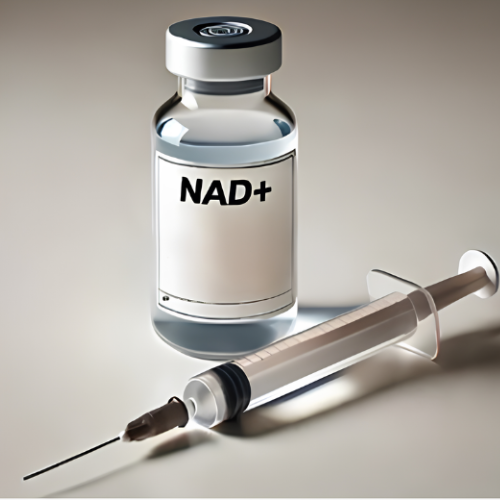
Administered subcutaneously, NAD+ Injections enhance cellular energy and repair. This treatment effectively supports brain function, detoxification processes, and overall cellular health, which are pivotal for maintaining youthful vigor and vitality.
The Science Behind NAD+ as an Anti-Aging Solution
NAD+ plays a critical role in energy metabolism and DNA repair, both of which are integral to delaying the aging process and reducing disease risk. By boosting NAD+ levels, these injections help maintain mitochondrial function, enhance cellular repair, and improve metabolic efficiency, making them a powerful anti-aging therapy.
Embrace the Benefits of NAD+ Injections
Enhanced Energy Production
Boosts energy at the cellular level, improving overall vitality and reducing fatigue.
Reduced Aging Signs
Slows the appearance of physical aging by supporting skin cell repair and regeneration.
Improved Cognitive Function
Supports brain health, enhancing memory, focus, and overall cognitive function.
Increased Metabolic Efficiency
Improves metabolism, aiding in weight management and overall bodily functions.
Detoxification
Helps detoxify the body by supporting the function of enzymes involved in removing toxins.
Strengthened Immune System
Enhances immune defense by supporting cellular repair mechanisms.
NAD+ Therapy
Frequently Asked Questions
What is NAD+?
NAD+ is a coenzyme essential for energy production and cellular repair, crucial for maintaining healthy bodily functions.
How are NAD+ Injections administered?
They are typically administered via subcutaneous injection, allowing for slow absorption and effective utilization.
Who can benefit from NAD+ Injections?
Individuals looking to enhance their energy levels, improve cognitive function, or combat the effects of aging can benefit from this treatment.
Are there any side effects?
Side effects are generally minimal and may include irritation at the injection site or mild flu-like symptoms.
Individuals looking to enhance their energy levels, improve cognitive function, or combat the effects of aging can benefit from this treatment.
How quickly can I see results?
While some benefits like increased energy can be felt almost immediately, long-term effects on cognitive health and aging may take longer to manifest.
Is long-term use of NAD+ safe?
Yes, NAD+ Injections are safe for long-term use under the guidance of a healthcare professional.
Can NAD+ Injections be combined with other therapies?
Yes, they can be effectively combined with other wellness therapies for enhanced results.
How do I start NAD+ Therapy at Three Lakes MD?
Schedule a consultation with our experts to determine if NAD+ Therapy is suitable for you based on your health goals and conditions.